
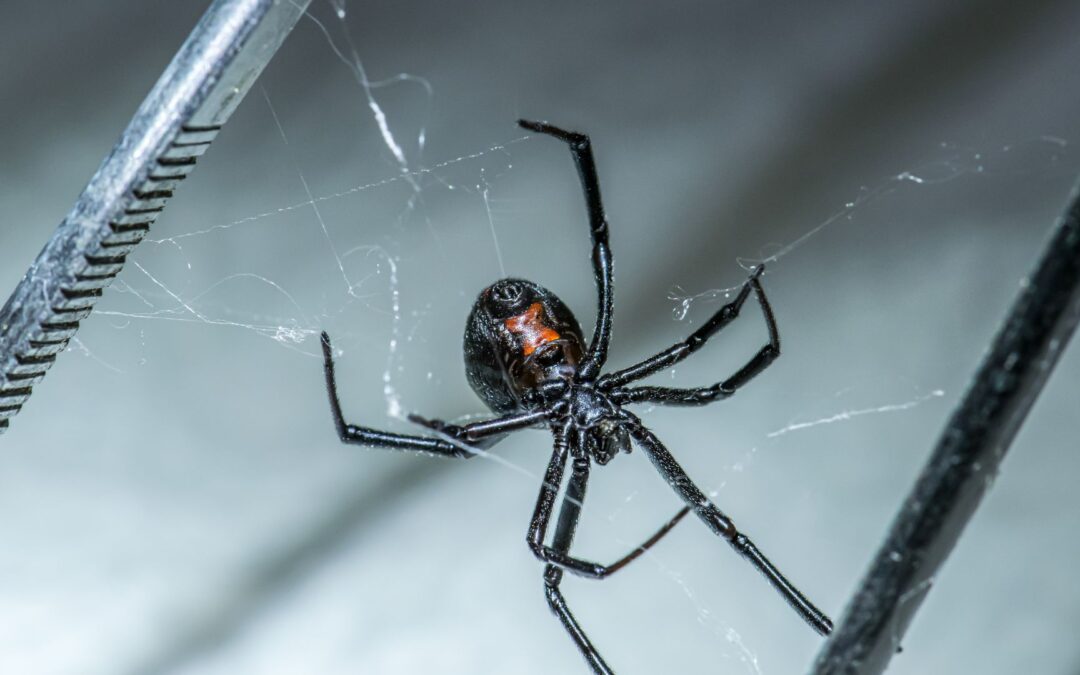
Most people find their first black widow by reaching into something they shouldn’t. A storage box in the garage. The corner behind the pool equipment. In Scottsdale, the spiders aren’t rare, and in homes near the desert edge, they’re close to inevitable. This blog covers where they nest, what keeps drawing them back, and what professional extermination actually involves from the first inspection through follow-up treatment.
Black Widow Nests in Scottsdale
Covered patios and poolside storage give black widows most of what they need. Add desert landscaping that rarely gets disturbed and you’ve created workable nesting habitat within a few feet of where your family spends time outdoors. Neighborhoods that border the McDowell Sonoran Preserve carry additional pressure. Widows displaced by construction and land clearing move toward established structures, and once a female settles into a spot that works, she stays.
That’s part of what makes Scottsdale different from other parts of the metro. The desert isn’t far, and the interface between landscaped properties and native habitat is exactly where black widow populations stay consistently high. A garage that backs up to natural desert is a different situation than one surrounded by turf and concrete, even if both are in the same zip code.
Signs of a Black Widow Infestation
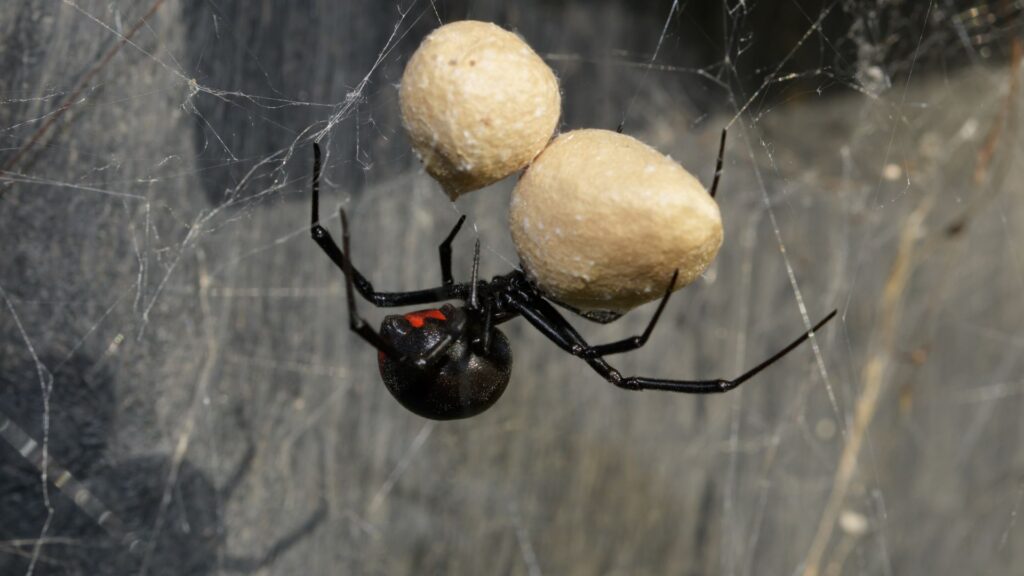
The web usually comes first. Black widows don’t build the symmetrical, orb-shaped webs most people picture. Theirs look like tangled fishing line dropped in a corner and left, strung low to the ground in irregular, three-dimensional sheets. Finding that kind of web in a garage corner or under patio furniture is the clearest early signal.
Four signs a black widow has taken up residence on your property:
- Irregular, tangled webs strung low in corners, under furniture, or behind stored items
- Round, papery egg sacs about the size of a marble, cream to tan in color, often suspended inside the web
- A shiny black spider with a red or orange hourglass marking on the underside of the abdomen
- Clustered webs in a single sheltered area, particularly in garages, sheds, or under deck boards
The Arizona Poison & Drug Information Center notes that the Western black widow is responsible for the large majority of medically significant spider bites reported in the state each year. Finding one early is not a minor thing.
One web doesn’t confirm an infestation, but several in close proximity signals something more than a wandering spider. Black widows are solitary, so clustering tells you the habitat is actively favorable. That’s a different problem than a single spider that wandered in from outside.
What Attracts Black Widows
Pull the cricket population out of a yard and black widow pressure usually drops alongside it. Black widows are hunters, and what they’re after in Scottsdale yards are the crickets and beetles that gather around outdoor lighting and standing water. Reduce those populations and the spiders follow. This is why cricket control and spider control tend to be addressed together.
Shelter matters as much as food. Black widows don’t need a crawl space or a hollow wall. Any corner that’s dark and undisturbed for a week or two qualifies. Outdoor furniture left in place all summer, seldom-moved garden tools, storage shelving that doesn’t get touched between seasons: all of it is usable habitat. The spider isn’t choosing your garage out of preference. It’s following conditions.
How to Keep Black Widows Away
Stacked wood near the exterior wall and unused equipment left in the garage: none of it looks threatening. To a black widow, any undisturbed corner that’s sheltered and dark qualifies as home. A cardboard box left alone for two weeks is enough.
Four adjustments that reduce black widow pressure around Scottsdale homes:
- Yellow or sodium vapor lighting at exterior fixtures (these attract far fewer prey insects than standard white lights)
- Woodpiles and heavy ground cover relocated at least several feet away from the home’s exterior wall
- Sealing gaps around garage doors and utility penetrations before a widow finds them first
- A habit of shaking out outdoor furniture and footwear stored in the garage before each use
The honest limitation of DIY prevention in Scottsdale is the desert. Black widows aren’t exclusive to yards with clutter or neglected corners. Homes with clean, well-maintained outdoor spaces still see them because the habitat pressure from surrounding desert keeps reseeding the local population. Prevention reduces the foothold. It doesn’t eliminate the source.
Black Widow Extermination Services
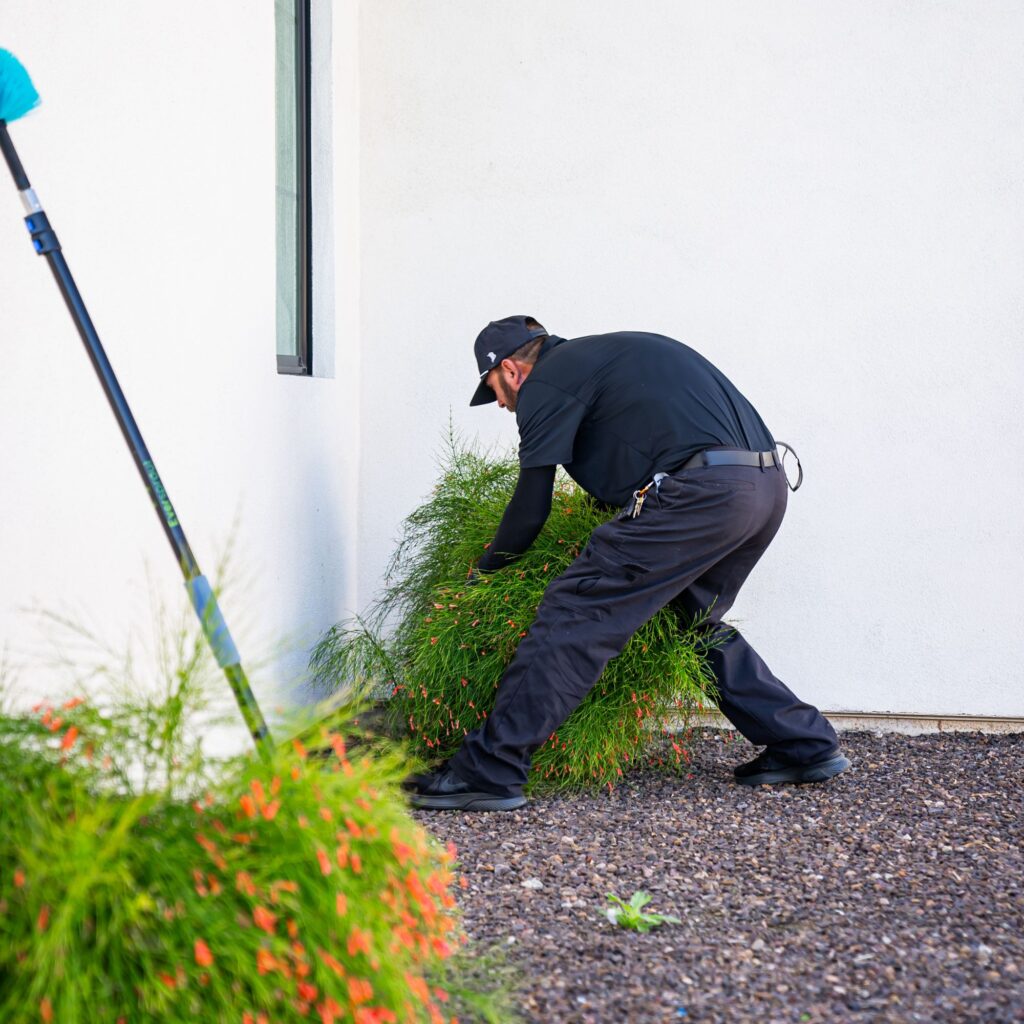
DIY sprays and sticky traps get some of the spiders you can see. The egg sacs get left behind. So does the prey population sustaining the widow. Professional spider control treats this as a system, not a single visible target.
What Professional Treatment Covers
Under deck boards and inside outdoor electrical boxes: these are the spots most homeowners never reach. A technician checks them in the first visit. Egg sacs left behind after any treatment will hatch within a few weeks and restart the population regardless of whether the adult was removed.
Our black widow control in Scottsdale covers:
- Physical removal of webs and egg sacs, including sites in hard-to-reach or routinely overlooked areas
- Exterior barrier treatment to intercept foraging widows before they reach entry points
- Targeting the crickets and beetles that sustain black widow populations around the home
- An assessment of structural gaps and conditions that are actively creating nesting habitat on the property
Visit our get rid of spiders in Arizona blog and general pest control page for more on how we approach spider pressure across the metro.
If the property backs up to the desert or has established native landscaping, plan on more frequent service than a newer build would need. The first visit is the right time to set those expectations. Egg sac hatch cycles don’t wait for a convenient follow-up schedule.
Get Nectar Black Widow Control
Black widows don’t move on once they’ve found a suitable spot. If prey is available and the shelter is right, the female stays and keeps producing egg sacs. Finding webs in the garage or near outdoor play areas isn’t something to wait on. Get it treated before the egg sacs hatch.
Request a free quote and we’ll schedule an assessment at your convenience. We serve the greater Phoenix area, including: