
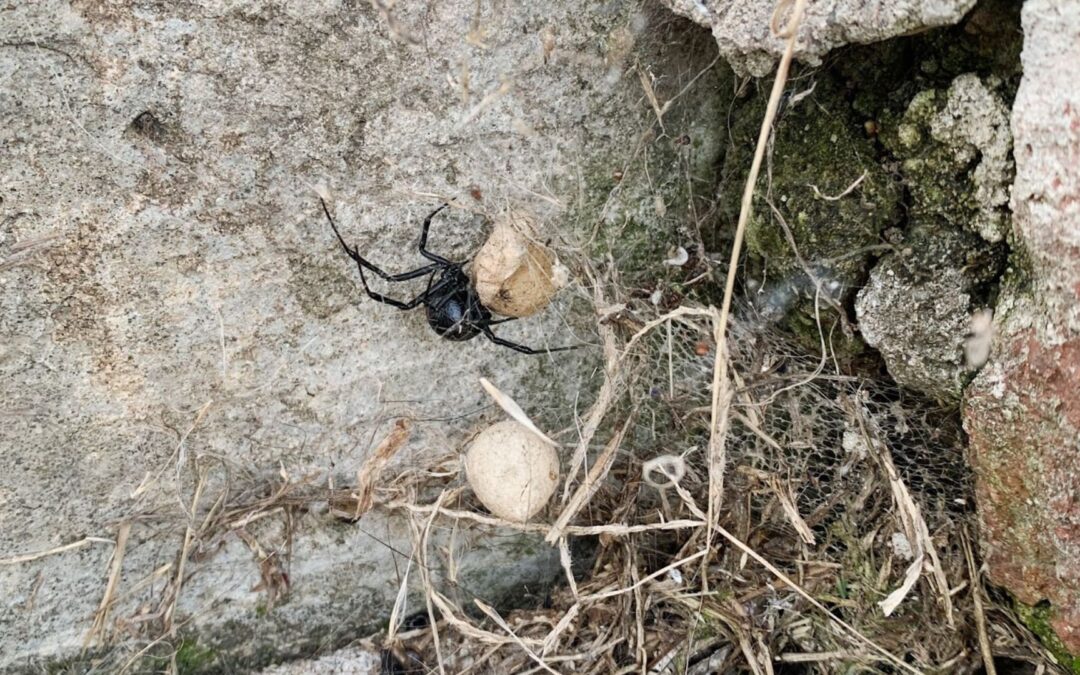
Scottsdale has a spider problem that most homeowners don’t realize until they find a black widow behind the garage shelving or a wolf spider crossing the kitchen floor at 11 p.m. Living near the McDowell Sonoran Preserve or backing up to desert open space puts homes directly in the path of species that are well adapted to moving indoors.
If you’re trying to figure out what you’re dealing with, what a professional actually does, and what it’s going to cost, here’s a straightforward breakdown.
Common Spiders in Scottsdale
Most spiders in the Scottsdale area are harmless, and a lot of them are genuinely useful — they eat the mosquitoes and gnats that would otherwise be in your yard. The ones worth worrying about are a short list, but they do show up regularly.
Black Widows and Wolf Spiders
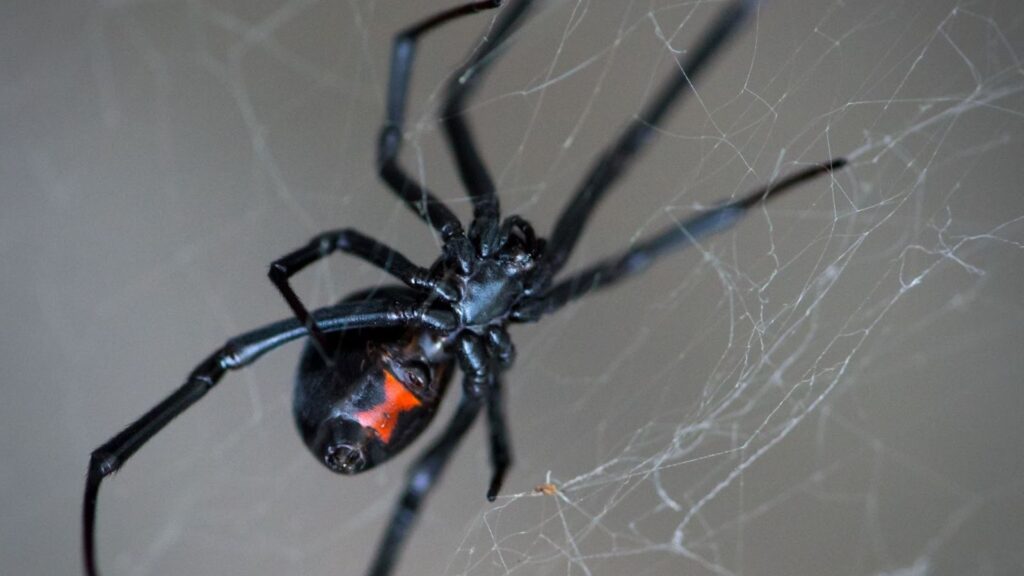
Black Widow Spider in Scottsdale AZ
Black widows are the species that gets the most attention, and for good reason. They favor low, dark, undisturbed spots: the underside of outdoor furniture, inside utility boxes, along the back of woodpiles, in corners behind stored items in the garage.
Bites are rare because black widows aren’t aggressive, but when they happen, the symptoms can be serious — especially for kids and older adults. The University of Arizona Cooperative Extension lists black widows as one of the most commonly encountered spiders around Arizona homes and recommends professional treatment when they’re found near living areas.
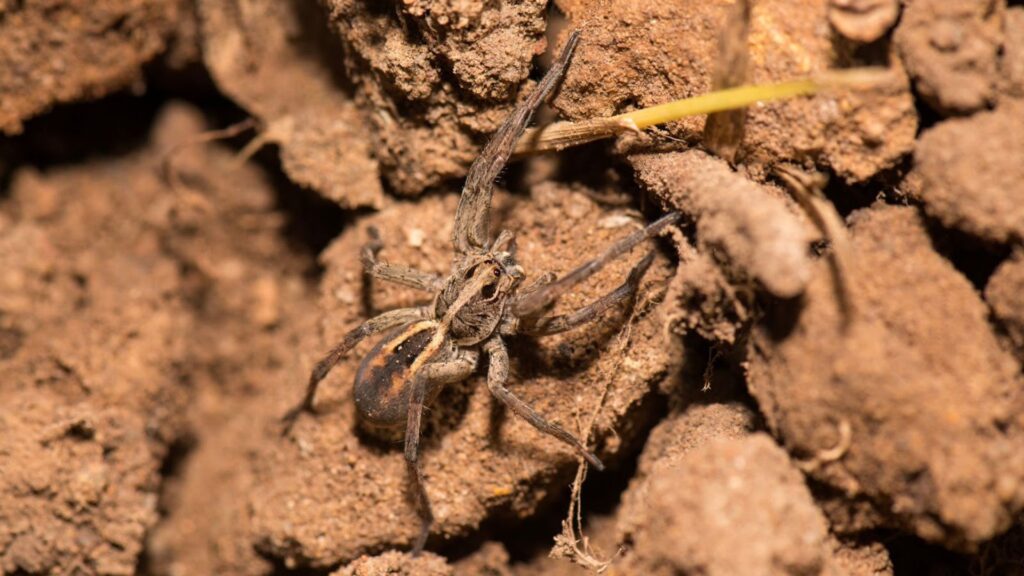
Wolf Spider
Wolf spiders are the ones people usually see moving. They’re big, fast, and startling. They don’t build webs — they hunt, and they’ll come inside following the insects they eat.
Seeing wolf spiders indoors usually means there’s an active prey population nearby: crickets, beetles, or other small insects. Treating wolf spiders without addressing them is like mopping up a leak without turning off the faucet.
Other species you’ll encounter in Scottsdale:
- Desert recluse: found in undisturbed closets, storage areas, and rarely-used rooms
- Cellar spiders: the long-legged ones that build messy webs in corners and along ceilings
- Orb weavers: large, dramatic-looking outdoor spiders that build circular webs near exterior lights
- Jumping spiders: small and fast, usually spotted on exterior walls and window screens
What Spider Exterminators Do
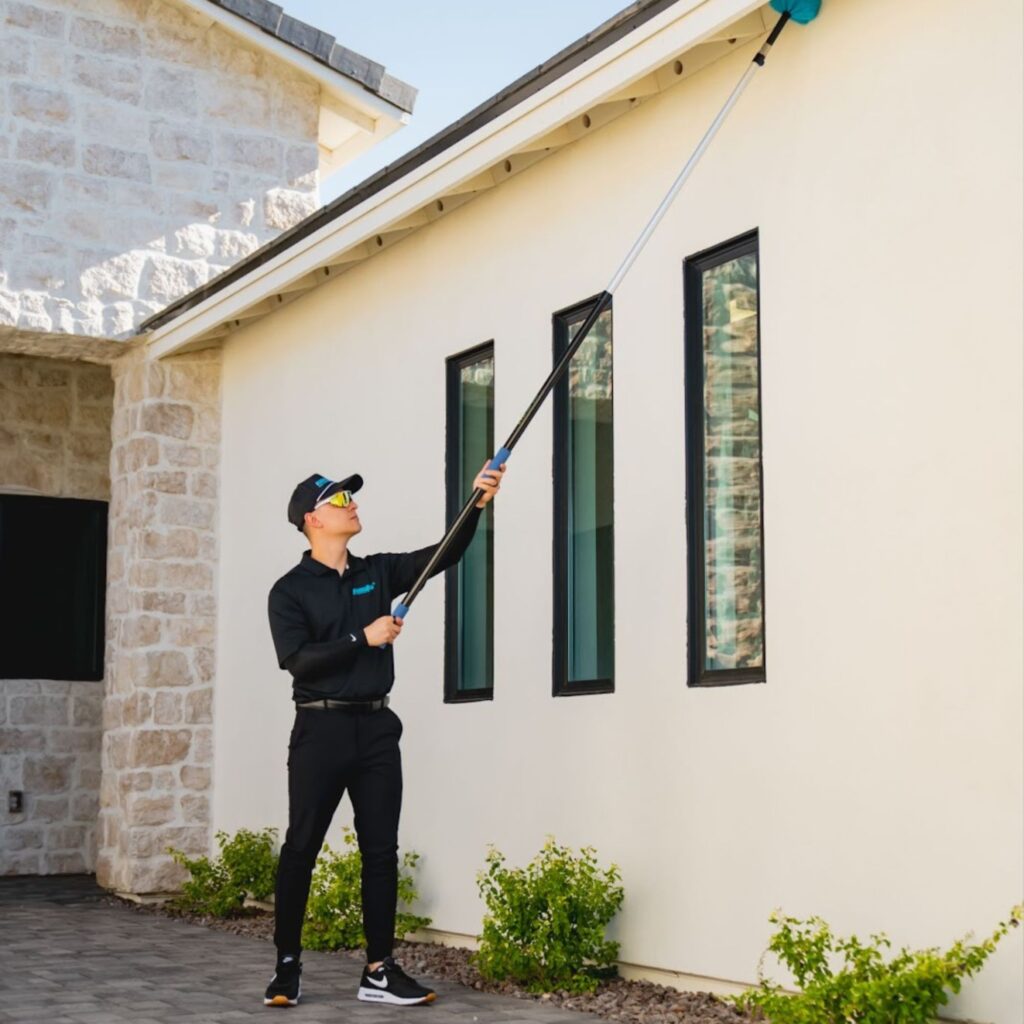
There’s a version of spider control that’s just spraying around the outside of the house. That’s not what a thorough job looks like.
Nectar’s Spider Treatment
A real inspection starts by walking the entire property — exterior first, then interior. The goal is finding webs, egg sacs, and the entry points that aren’t obvious: gaps around pipe penetrations, worn door sweeps, spots where stucco has cracked near the roofline.
Treatment builds a barrier around the home using eco-friendly, pet-safe products applied along the foundation, around windows and doors, and in any areas with confirmed activity.
Web removal is part of the service, and it matters more than people expect. Removing webs takes out egg sacs before they hatch and makes it much easier to spot new activity between visits.
The part that separates good spider control from a temporary fix is addressing what spiders eat. A yard full of crickets is an open invitation. We treat the broader pest ecosystem, not just the spiders themselves.
What the process looks like:
- Full inspection: exterior and interior, with attention to harborage areas and entry points
- Barrier treatment along the foundation and around all entry points with pet-safe products
- Web and egg sac removal from all accessible areas
- Broader pest reduction to eliminate the food sources keeping spiders around
What to Expect From Spider Control
Before scheduling anything, most homeowners want to know what the service actually involves. Here’s how we handle it.
Every service includes a full inspection for webs, egg sacs, and the hiding spots spiders favor: eaves, garage corners, utility areas, and along the foundation. We don’t skip the walk-through — that inspection shapes what gets treated and where.
From there, we apply a protective barrier along eaves, door frames, and the foundation perimeter. Web removal is part of every visit, which clears out egg sacs and makes it easy to spot new activity between services.
The part that makes the biggest difference long-term is treating for the insects spiders feed on. Spiders follow their food supply. By reducing that, we create conditions where spiders no longer have a reason to be there.
If you want to know what this looks like for your specific property, the best starting point is a free assessment.
Get Nectar Spider Control Today
We’ve seen a lot of Scottsdale homes with spider issues that weren’t going away on their own. The pattern is almost always the same: a food source the homeowner didn’t know was there, a few entry points that hadn’t been sealed, and a perimeter that hadn’t been treated.
Our treatments are eco-friendly, pet-safe, and backed by our Pest-Free Guarantee. If spiders come back between visits, so do we. No runaround.
Get started with a free quote online. We serve homes throughout the Greater Phoenix area, including: